Nvidia shares fall in premarket trading as Jensen Huang’s return sparks US political backlash – business live
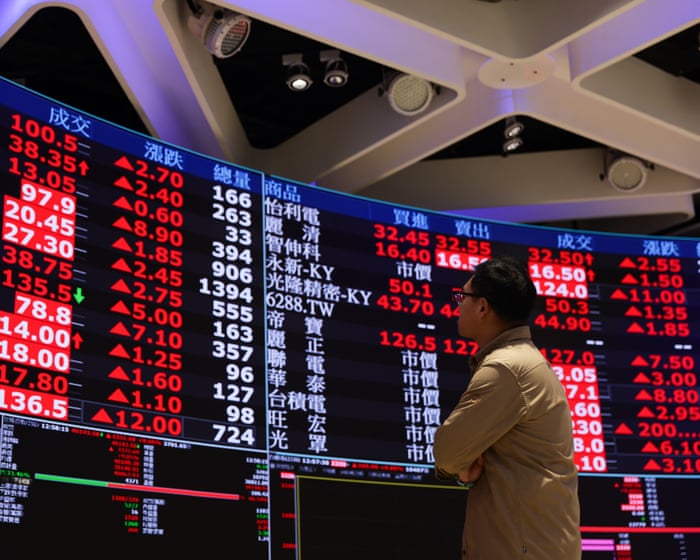
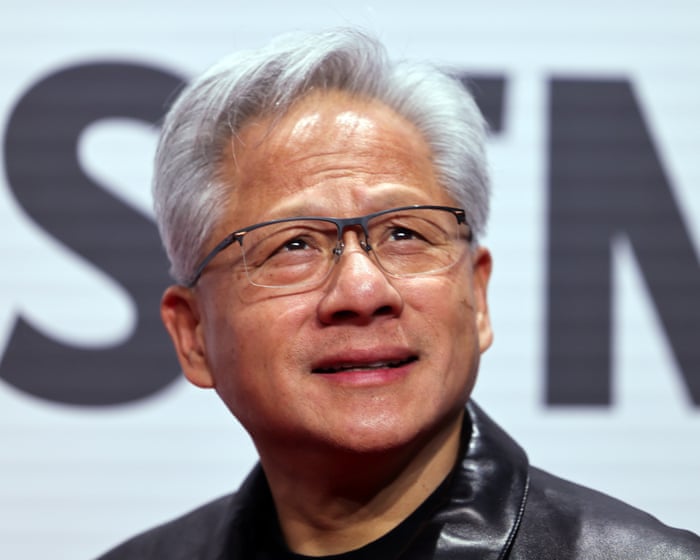
Nvidia shares are under pressure in premarket trading as bipartisan outrage erupts in Washington over Jensen Huang’s reinstatement as CEO and President Trump’s public claim that he helped broker the comeback. Following revelations surrounding an alleged affair involving a suspected Chinese intelligence operative, both Republican and Democratic lawmakers are questioning how the world’s most strategically critical semiconductor company handled board governance and national-security vetting.
For Wall Street, the episode injects acute political and regulatory risk straight into the heart of the global AI trade. With equities already bruised — the S&P 500 down 2.42% and the Nasdaq off 1.71% — institutional desks are forced to reprice a company whose valuation has long assumed frictionless execution and near-untouchable leadership.
WHY IT MATTERS Nvidia sits at the center of global AI capital expenditure; sustained governance turmoil or export-control retaliation from Congress could widen volatility across the entire semiconductor and hyperscaler complex.
CRITICAL ANGLE Markets initially cheered Huang’s return as a $1 trillion relief rally, but cheering executive indispensability ignores classic key-person and board-independence risks that institutional funds rarely forgive for long.
ANALYST DEEP DIVE · OFFLINE BRIEF
Key Takeaways
Bipartisan Senate pushback turns a corporate governance drama into a live Washington national-security investigation.
Premarket weakness shows investors are shifting from 'relief that Huang is back' to pricing headline and regulatory overhang.
Broader equity weakness (S&P 500 -2.42%, DAX -3.77%) leaves high-multiple AI leaders with far less cushion for bad news.
Winners & Exposed
AMD, custom ASIC designers (Broadcom, Marvell), and sovereign-cloud alternatives gain incremental negotiating leverage if enterprise buyers hedge single-vendor risk; Nvidia’s board and leveraged AI ETFs absorb the immediate drawdown.
Contrarian / Skeptic View
Bulls argue that CUDA’s software moat and hyperscaler order books remain unassailable in the near term, meaning political hearings create noisy dips rather than structural revenue destruction.
What to Watch Next
Watch upcoming congressional hearing dates for Huang, any formal Commerce Department or CFIUS statements, and whether Nvidia’s board announces independent governance reforms.
MarketWatch
Sunday’s pot roast now costs more than a Thanksgiving feast. Why beef won’t get cheaper for years.
MarketWatch
A four-pound chuck roast now averages $36.33 in U.S. grocery aisles — more than the $35 Walmart charges for a Thanksgiving meal kit feeding ten people. While retailers heavily discount seasonal staples like turkey to pull shoppers through the door, structural shortages in the U.S. cattle herd have pushed retail beef prices to historic highs that analysts warn will persist for years.
Unlike quick-cycle poultry or pork supply chains, rebuilding a depleted cattle herd requires multi-year biological lead times, high feed and financing costs, and rancher confidence in future margins. With U.S. 10-year Treasury yields still elevated near 4.89%, agricultural borrowing costs remain an additional brake on herd expansion.
WHY IT MATTERS Sticky protein inflation hits middle-income household budgets directly and complicates the Federal Reserve’s narrative that consumer price pressures have been cleanly defeated.
CRITICAL ANGLE Headline CPI prints often mask the everyday 'grocery sticker shock' that drives consumer sentiment; discounted holiday bundles make great marketing copy, but they obscure persistent supply-side food inflation.
ANALYST DEEP DIVE · OFFLINE BRIEF
Key Takeaways
U.S. cattle herd rebuilding is a multi-year biological cycle, meaning beef prices are structurally sticky rather than a brief seasonal spike.
Grocer loss-leaders like $35 Thanksgiving bundles mask rising baseline protein costs across the rest of the cart.
Poultry producers and discount grocers benefit from consumer trade-down away from beef; beef-heavy restaurant chains and meatpackers face tighter gross margins.
Contrarian / Skeptic View
If U.S. consumers accelerate substitution toward chicken, pork, and plant proteins, demand destruction could cap beef prices sooner than cattle-cycle models predict.
What to Watch Next
USDA Cattle Inventory reports, upcoming PCE/CPI food-at-home sub-indices, and Q4 margin commentary from major U.S. grocers and casual dining chains.
The Guardian Business
EU to impose cap on Chinese hybrid EV imports next month
The Guardian Business
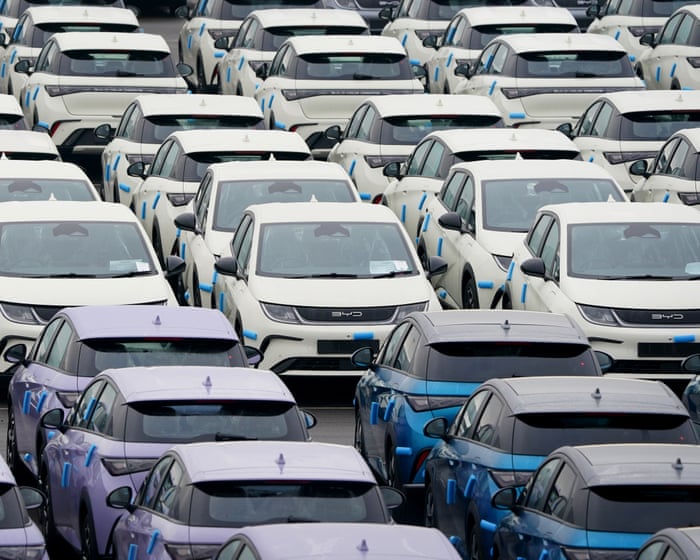
The European Commission has confirmed it will impose temporary tariff-free import quotas on Chinese hybrid vehicles starting next month, closing a major loophole that Chinese automakers used to sidestep earlier tariffs on pure battery-electric cars. Notably, the quota framework will also sweep in hybrid imports from the UK, Japan, and Turkey, signaling a broader defensive turn in Brussels’ industrial trade policy.
European legacy automakers have lobbied aggressively for relief as Chinese plug-in hybrids surged across EU showrooms at aggressive price points. Yet with Germany’s DAX tumbling 3.77% and Paris’s CAC 40 down 1.38%, investors remain skeptical that trade walls alone can fix Europe’s structural cost and software disadvantage.
WHY IT MATTERS Short-term breathing room for European mass-market carmakers (Stellantis, Renault, Volkswagen), but heightened friction with Beijing, London, and Tokyo — plus higher showroom prices for European drivers.
CRITICAL ANGLE Tariff quotas buy time, not competitiveness: if European automakers use protectionism to slow down their own cost-cutting and EV software transition, they risk falling even further behind globally.
ANALYST DEEP DIVE · OFFLINE BRIEF
Key Takeaways
Brussels is plugging the hybrid loophole after Chinese brands pivoted swiftly from pure EVs to plug-in hybrids.
Extending caps to the UK, Japan, and Turkey widens the diplomatic and supply-chain fallout beyond China.
Chinese automakers are already accelerating plans to build local European assembly plants to jump the tariff wall.
Winners & Exposed
European domestic auto plants and EU component suppliers get near-term volume protection; European consumers, UK/Japanese hybrid exporters, and Chinese importers face higher landed costs.
Contrarian / Skeptic View
Supporters say temporary quotas are essential to prevent irreversible deindustrialization of Europe’s auto supply chain while local battery gigafactories scale up.
What to Watch Next
Exact quota volumes published by the European Commission, potential retaliatory trade measures from Beijing on European luxury goods or spirits, and BYD/Chery European factory announcements.
MarketWatch
HPE just posted its strongest growth ever — but its stock is sinking
Hewlett Packard Enterprise delivered its strongest revenue growth on record and raised its full-year financial guidance on surging enterprise AI server demand — yet the stock is sliding anyway. That counterintuitive market reaction captures the unforgiving mood of late-2026 tech investing, where headline top-line acceleration is no longer enough to earn a rerating.
Investors are scrutinizing the quality of AI hardware growth: server racks stuffed with expensive third-party GPUs carry far thinner gross margins than legacy software or networking divisions. When the broader market is in risk-off mode, traders quickly punish any gap between booming AI revenue and slower bottom-line margin expansion.
WHY IT MATTERS HPE’s selloff is a bellwether for the 'AI infrastructure margin debate' affecting Dell, Supermicro, and legacy hardware vendors trying to prove AI servers are genuinely profitable.
CRITICAL ANGLE Raising guidance while watching your stock drop is the classic sign of a 'priced-for-perfection' narrative colliding with hardware economics — revenue growth is vanity if GPU pass-through squeezes gross margins.
ANALYST DEEP DIVE · OFFLINE BRIEF
Key Takeaways
Record revenue growth and raised guidance failed to lift HPE shares, showing high market skepticism on AI server profitability.
AI hardware resellers pass through steep GPU costs, compressing percentage gross margins even as dollar revenue climbs.
Risk-off tape amplifies 'sell-the-news' behavior across enterprise hardware names.
Winners & Exposed
High-margin AI software, networking, and silicon designers retain pricing power; commodity server assemblers face intense investor scrutiny on free cash flow conversion.
Contrarian / Skeptic View
HPE bulls point out that AI server deployments pull through higher-margin liquid cooling, networking, and multi-year services contracts that pay off over time.
What to Watch Next
Gross margin trajectory in HPE’s server and networking segments next quarter, plus peer earnings read-throughs from Dell and Cisco.
The Guardian Business
Channel 4 hit as Unilever switches from TV to influencer marketing
Britain’s Channel 4 has taken a major commercial hit after Unilever — one of the UK’s largest advertisers and the parent of Dove — slashed nearly all of its traditional television ad spend with the broadcaster to redirect budgets toward online influencer marketing. Analysis indicates Channel 4 is suffering disproportionately compared with larger commercial rivals.
The move underscores a structural reallocation sweeping global consumer-goods marketing: legacy CPG giants increasingly favor creator-led social video, measurable conversion funnels, and lower production overhead over linear TV reach. For publicly owned, ad-funded broadcasters, the erosion of blue-chip anchor advertisers leaves very little room to maneuver.
WHY IT MATTERS Accelerates the secular revenue squeeze on European linear television networks while validating the creator economy as a core institutional media channel for Fortune 500 brands.
CRITICAL ANGLE Chasing influencer ROI works well for short-term product drops, but CPG giants risk eroding long-term mass brand equity if they abandon high-trust broadcast environments entirely.
ANALYST DEEP DIVE · OFFLINE BRIEF
Key Takeaways
Unilever’s exit from Channel 4 linear TV marks a milestone shift of blue-chip CPG ad budgets toward creators and social platforms.
Mid-sized legacy broadcasters face steeper revenue cliffs than global streaming giants with scaled ad tiers.
Digital ad platforms (Meta, YouTube, TikTok) and creator agencies capture the redirected spend.
Winners & Exposed
Digital video platforms, influencer marketing agencies, and CPG procurement teams win; linear European broadcasters (Channel 4, ITV, TF1, M6) face tougher upfront ad negotiations.
Contrarian / Skeptic View
Linear TV still delivers unmatched simultaneous mass reach for live events and brand-building, and some advertisers eventually rotate back when social ad CPMs inflate.
What to Watch Next
Upcoming UK and European broadcaster ad-revenue updates, plus Unilever’s next quarterly marketing-efficiency disclosures.
Geopolitics & Global Policy
World Affairs · Diplomacy · Elections
The Guardian
Ukraine confirms it used naval drones to strike two Russian ships off Libya
The Guardian
Ukraine’s security service (SBU) has formally confirmed it executed a long-range maritime drone strike against two Russian naval vessels off the coast of Libya, deploying seven unmanned surface drones from a mothership to sink the Merkury — one of Russia’s newest stealth corvettes. The operation represents a dramatic geographic expansion of Kyiv’s asymmetric naval campaign far beyond the Black Sea.
By proving it can project lethal, low-cost unmanned strike capabilities into the central Mediterranean, Ukraine has forced Moscow to rethink the security of its entire overseas naval logistics network, which supports Russian military and commercial operations across North Africa and the Sahel.
WHY IT MATTERS Redefines modern naval warfare economics: inexpensive sea drones operating from civilian-style motherships can now threaten billion-dollar warships thousands of kilometers from the front line.
CRITICAL ANGLE While tactically brilliant for Kyiv, extending drone warfare into busy Mediterranean shipping lanes risks raising maritime insurance premiums and triggering diplomatic pushback from neutral coastal states.
ANALYST DEEP DIVE · OFFLINE BRIEF
Key Takeaways
Ukraine’s SBU confirmed launching seven sea drones from a mothership off Libya, sinking Russia’s modern Merkury corvette.
Moscow’s Mediterranean naval footprint — vital for its Africa logistics — is now demonstrably vulnerable.
Asymmetric drone-carrier tactics are rapidly becoming a template studied by navies worldwide.
Winners & Exposed
Defense-tech drone makers and counter-UAS naval defense contractors see surging demand; traditional blue-water fleets without layered drone defenses face urgent retrofit costs.
Contrarian / Skeptic View
Skeptics note that symbolic long-range strikes, while embarrassing for the Kremlin, do not immediately alter territorial realities along the eastern Ukrainian land front.
What to Watch Next
Moscow’s retaliatory posture in the Mediterranean or Black Sea, NATO maritime security assessments, and European defense-procurement shifts toward unmanned naval systems.
BBC World
Trump faces backlash after saying he 'convinced' Nvidia to reinstate CEO Jensen Huang
BBC World
President Trump is facing rare bipartisan criticism after publicly taking credit for 'convincing' Nvidia’s board to reinstate CEO Jensen Huang — a move that briefly sparked a $1 trillion rebound in the chipmaker’s market value. Lawmakers across the aisle argue that direct White House intervention in a public company’s C-suite blurs the boundary between free-market capitalism and state-directed industrial favoritism.
The controversy cuts right into the heart of U.S. China policy. Critics contend that pressuring a board to look past national-security allegations undermines Washington’s own credibility when demanding strict export controls and supply-chain decoupling from allied governments in Europe and Asia.
WHY IT MATTERS Heightens political risk around U.S. tech policy and creates fresh uncertainty over whether semiconductor export rules will be enforced consistently or traded as personal political bargains.
CRITICAL ANGLE When a U.S. president personally brokers a Fortune 10 CEO’s comeback, it invites accusations of crony capitalism — and hands Beijing a propaganda gift regarding American corporate independence.
ANALYST DEEP DIVE · OFFLINE BRIEF
Key Takeaways
Trump’s public claim of brokering Huang’s reinstatement triggered rare bipartisan pushback in Washington.
The episode raises acute questions about executive-branch leverage over publicly traded tech giants.
Allied capitals watching U.S. China policy now face murkier signals on national-security red lines.
Winners & Exposed
Congressional oversight committees gain political ammunition; White House tech-policy credibility and predictable corporate governance norms take a hit.
Contrarian / Skeptic View
Defenders argue the White House was acting pragmatically to stabilize America’s most strategic AI champion and protect trillions in U.S. retirement-account wealth.
What to Watch Next
Statements from Senate Intelligence and Banking committees, plus any formal ethics or governance inquiries into the board’s decision.
NPR
Jensen Huang returns to Nvidia. And, Rep. Gomez resigns amid alleged sexual misconduct
NPR
Alongside the Nvidia-White House storm dominating Washington’s morning briefing, California Democratic Representative Jimmy Gomez announced he will resign effective December 1 following a House Ethics Committee report into sexual misconduct allegations. The swift exit underscores heightened party pressure to neutralize ethics scandals ahead of upcoming legislative battles.
In a narrowly divided House of Representatives, even a single sudden vacancy carries outsized procedural weight, tightening whip counts on key budget, tax, and defense votes until a special election can be held in Los Angeles.
WHY IT MATTERS Reduces Democratic voting margin in the House temporarily and triggers a competitive California special election while Congress navigates year-end funding and policy deadlines.
CRITICAL ANGLE While rapid resignations protect institutional credibility, the recurring pattern of ethics-driven departures highlights persistent accountability gaps inside congressional offices.
ANALYST DEEP DIVE · OFFLINE BRIEF
Key Takeaways
Rep. Jimmy Gomez (D-CA) resigns effective Dec. 1 following a House Ethics report.
Tight House margins mean every temporary seat vacancy affects floor math during year-end bills.
California’s governor will need to schedule a special election for the heavily Democratic district.
Winners & Exposed
House leadership avoids a prolonged floor-censure spectacle; constituents face months without full voting representation during lame-duck and early-session negotiations.
Contrarian / Skeptic View
Because Gomez’s Los Angeles district is safely Democratic, the long-term partisan balance of the House is unlikely to shift once the special election concludes.
What to Watch Next
California special-election calendar announcement and House floor vote margins in early December.
The Guardian
Russian warship sinks in Benghazi after suspected Ukrainian drone attack
The Guardian
Initial reports from the Libyan port city of Benghazi describe a dramatic night-time explosion that sank a docked Russian warship as it prepared to transit back toward Russia. Before Kyiv’s formal claim of responsibility, the blast sent shockwaves through eastern Libya, where Russian military personnel have long relied on local strongman Khalifa Haftar’s ports as a safe Mediterranean staging ground.
The strike exposes a glaring vulnerability in Russia’s 'shadow logistics' across the Mediterranean: friendly foreign ports lack the layered air, sea, and electronic defenses of home bases, turning routine refueling stops into high-risk targets.
WHY IT MATTERS Weakens Moscow’s leverage in Libya and forces Russian naval and mercenary logistics in Africa to adopt costlier, slower resupply routes.
CRITICAL ANGLE Local hosts like Benghazi’s authorities now face an uncomfortable dilemma — continuing to shelter Russian warships invites foreign covert strikes straight into their own commercial harbors.
ANALYST DEEP DIVE · OFFLINE BRIEF
Key Takeaways
The night-time Benghazi harbor blast demonstrated that Russian vessels are no longer safe even while docked in friendly North African ports.
Eastern Libyan port security and Russian force-protection protocols were caught off guard.
Follow-on commercial shipping caution around Benghazi could raise local import costs.
Winners & Exposed
Western intelligence and Ukrainian special operations score a strategic deterrence win; Russian Africa Corps logistics and Benghazi port operators face heightened risk.
Contrarian / Skeptic View
Russia can still rely on airlift corridors and dispersed commercial charters to sustain its presence in Africa, limiting the immediate collapse of its regional influence.
What to Watch Next
Responses from eastern Libyan authorities, satellite imagery of remaining Russian ships in the Mediterranean, and maritime war-risk insurance pricing.
Technology & Artificial Intelligence
AI · Silicon Valley · Semiconductors
The Guardian Tech
Congress to grill Jensen Huang over ties with China and Trump’s intervention
The Guardian Tech
Congressional lawmakers from both parties are preparing to summon Nvidia CEO Jensen Huang to testify on Capitol Hill over his reinstatement, alleged national-security vulnerabilities tied to China, and the Trump administration’s intervention in the boardroom. Senator Chris Van Hollen blasted the episode as 'exhibit A' of political rot in U.S. big-tech and AI policy.
For Silicon Valley, the looming hearings mark a sharp escalation: AI frontier firms are no longer treated merely as commercial growth engines, but as quasi-sovereign strategic assets subject to aggressive congressional oversight, export policing, and public cross-examination.
WHY IT MATTERS Signals tighter congressional scrutiny on AI chip exports, executive security clearances, and Big Tech lobbying ties to the White House.
CRITICAL ANGLE High-profile tech hearings often generate viral soundbites without producing coherent semiconductor law — yet the reputational and compliance drag on management focus is very real.
ANALYST DEEP DIVE · OFFLINE BRIEF
Key Takeaways
Lawmakers plan to grill Jensen Huang directly over China ties and White House involvement in his return.
AI chipmakers are now firmly inside the crosshairs of U.S. national-security politics.
Heightened oversight could slow down commercial chip licensing or trigger stricter export-control riders.
Winners & Exposed
Compliance lawyers, Washington tech lobbyists, and rival chipmakers gain leverage; Nvidia executives face a major distraction during a pivotal product cycle.
Contrarian / Skeptic View
Historically, Big Tech CEOs have weathered tough Capitol Hill grillings with minimal lasting impact on core product demand once the news cycle moves on.
What to Watch Next
Subpoena or hearing schedule from Senate committees and any legislative proposals tightening China AI chip rules.
The Guardian Tech
Apple iPhone Duo review: the most novel and interesting iPhone in almost a decade
The Guardian Tech
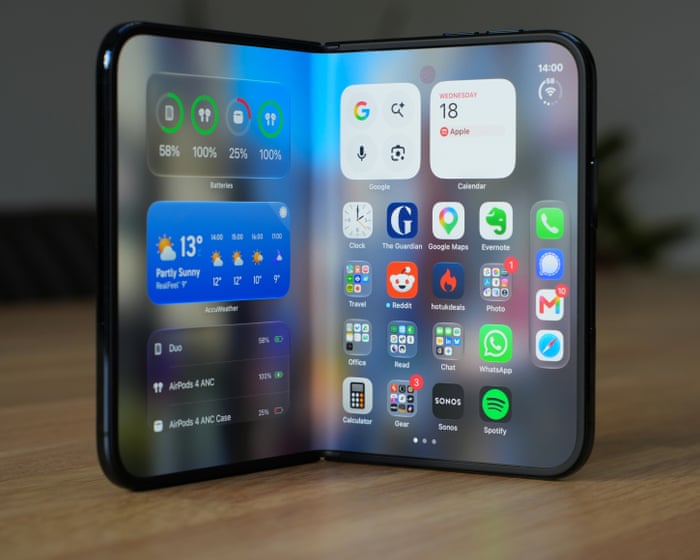
Early reviews of Apple’s long-awaited folding smartphone — the iPhone Duo — call it the most inventive iPhone hardware leap in nearly a decade. By unfolding a pocketable handset into a compact iPad-like canvas, Apple has re-engineered iOS multitasking in ways that feel genuinely fresh for power users and mobile readers.
Still, reviewers caution that first-generation trade-offs remain: bulk, hinge durability questions, and a steep flagship price tag make the Duo early-adopter gold rather than an immediate mass-market replacement for the standard iPhone.
WHY IT MATTERS Validates the foldable form factor globally, likely lifting average selling prices (ASPs) for Apple while giving Samsung, Huawei, and display suppliers (OLED/hinge makers) a fresh demand catalyst.
CRITICAL ANGLE Apple’s famous 'wait until it’s ready' playbook works brilliantly for margins, but first-gen foldables historically face brutal durability tests once millions of everyday users put them in pockets.
ANALYST DEEP DIVE · OFFLINE BRIEF
Key Takeaways
The iPhone Duo is Apple’s biggest form-factor redesign in nearly ten years, blending phone and mini-tablet workflows.
Custom iOS multitasking features set Apple apart from earlier Android foldables, though price and weight limit mass appeal.
Even modest unit volumes can meaningfully boost Apple’s hardware revenue through premium ASPs.
Winners & Exposed
Apple’s services/hardware ecosystem and foldable OLED/hinge component suppliers win; mid-tier Android foldable rivals face intense brand compression at the ultra-premium tier.
Contrarian / Skeptic View
If high pricing and thicker pocket ergonomics keep adoption below 5% of the iPhone installed base, the Duo risks becoming a niche prestige product like Vision Pro rather than a supercycle.
What to Watch Next
Holiday pre-order lead times, first-quarter ASP data in Apple’s earnings, and third-party hinge durability stress tests.
The Guardian Tech
Child safety groups urge Amazon and eBay to stop selling AI toys until proved safe
The Guardian Tech
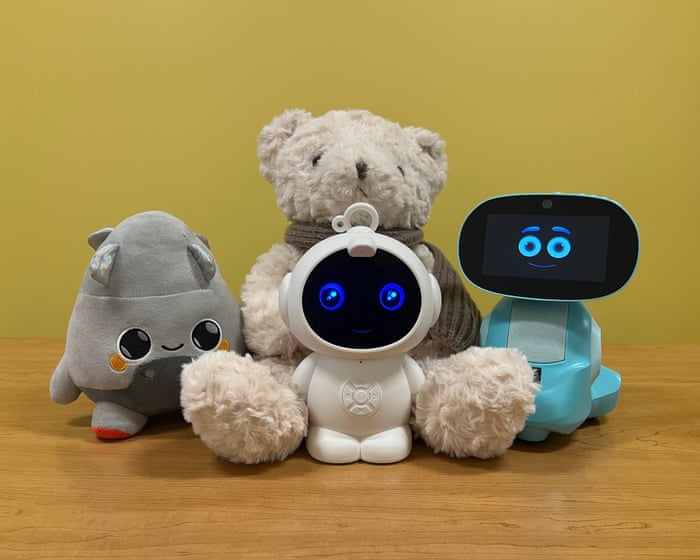
More than 150 child-safety organizations and experts across six continents have urged Amazon and eBay to halt holiday sales of AI-powered children’s toys until independent safety standards are enforced. Campaigners warn that conversational LLMs embedded inside plush toys and learning robots pose serious data-privacy risks and can generate unpredictable, age-inappropriate dialogue.
The coordinated campaign arrives right at the peak of the Christmas retail window, spotlighting a regulatory blind spot: while social media platforms face strict age-verification laws, cheap connected AI hardware toys are flooding e-commerce marketplaces with minimal oversight.
WHY IT MATTERS Raises immediate compliance and reputational pressure on Amazon, eBay, and consumer-AI hardware startups ahead of the Q4 holiday shopping surge.
CRITICAL ANGLE Plugging unconstrained cloud LLMs into children’s toys is a classic 'move fast and break things' mistake — one viral safety failure could trigger sweeping EU and U.S. hardware bans.
ANALYST DEEP DIVE · OFFLINE BRIEF
Key Takeaways
150+ global child-safety groups are targeting Amazon and eBay directly to pull unvetted AI toys before Christmas.
Key concerns include always-on voice data harvesting and unguarded conversational AI outputs to young kids.
Regulators in the EU (under the AI Act) and U.S. FTC are increasingly attentive to youth AI safety.
Winners & Exposed
Established toy brands with strict safety certifications benefit if marketplaces delist low-cost unvetted AI gadgets; marketplace sellers and consumer AI-toy startups face sudden listing bans.
Contrarian / Skeptic View
Proponents argue well-guarded educational AI companions can personalize tutoring and language learning for kids if built with strict on-device guardrails and zero data retention.
What to Watch Next
Marketplace policy responses from Amazon and eBay this week, plus potential EU AI Act enforcement notices on connected toys.
The Guardian Tech
Two groups verify mathematician’s claim that Claude helped prove mathematics problem
The Guardian Tech
In what could become a landmark moment for AI-assisted science, two independent verification groups say mathematician Levent Alpöge’s claim at Anthropic — that he used Claude over six weeks to help prove the 19th-century Riemann hypothesis — checks out. Solving one of mathematics’ most storied Millennium Prize problems with an AI collaborator would shatter long-held assumptions about the ceiling of machine reasoning.
Even within the fiercely competitive AI lab race, formal mathematical verification offers something rare: an objective, un-gameable benchmark of deep reasoning. If peer-reviewed publication confirms the proof in full, it will validate massive R&D bets on test-time compute and formal proof assistants.
WHY IT MATTERS A watershed moment for AI credibility — shifting the narrative from 'chatbots that summarize emails' to 'scientific discovery engines' capable of advancing pure math, cryptography, and drug discovery.
CRITICAL ANGLE History is littered with premature Riemann hypothesis proofs that collapsed under months of line-by-line scrutiny; healthy scientific skepticism remains essential until full formal verification (e.g. Lean) and journal peer review conclude.
ANALYST DEEP DIVE · OFFLINE BRIEF
Key Takeaways
Two groups reportedly verified Anthropic mathematician Levent Alpöge’s six-week Claude-assisted proof of the Riemann hypothesis.
Success would represent the most dramatic demonstration yet of human-AI collaboration in pure mathematics.
Boosts Anthropic’s scientific prestige and reinforces enterprise demand for frontier reasoning models.
Winners & Exposed
Anthropic, formal-verification tooling ecosystems, and AI-for-science startups gain massive tailwinds; skeptics claiming LLMs are 'mere stochastic parrots' face a tough rebuttal.
Contrarian / Skeptic View
Extraordinary claims in number theory require exhaustive multi-month peer review — subtle logical gaps in Riemann proofs have fooled top experts before.
What to Watch Next
Full public paper release, formal computer-checked proof verification in Lean/Coq, and reactions from Fields Medalists and the Clay Mathematics Institute.
US Sports Desk
NFL · College Football · NBA · MLB · NHL
NFL · ESPN
NFL Power Rankings: Stacking all 32 teams for Week 12, plus extension candidates
NFL · ESPN
Heading into NFL Week 12, ESPN’s full 1-to-32 Power Rankings spotlight a razor-thin divide between true Super Bowl contenders and playoff pretenders, while flagging breakout stars entering prime contract-extension territory. As Thanksgiving football approaches, roster depth and quarterback efficiency under pressure are separating the AFC and NFC elite from teams fading down the stretch.
Front offices are already looking past December toward the 2027 salary cap: locking in ascending pass rushers, wide receivers, and young quarterbacks early has become essential as market-resetting deals inflate every offseason.
WHY IT MATTERS Week 12 marks the unofficial pivot point of the NFL season — teams outside the top 14 face steep playoff math, while extension-eligible stars are playing for tens of millions in guaranteed money.
CRITICAL ANGLE Power rankings love recency bias, often overreacting to one primetime blowout while underrating trench durability and healthy defenses that actually travel in January.
ANALYST DEEP DIVE · OFFLINE BRIEF
Key Takeaways
Week 12 separates legitimate championship rosters from fragile early-season surprises.
Contract-extension candidates are auditioning during high-leverage late-season games.
Early extensions save cap-savvy front offices millions before next spring’s free-agency inflation.
Winners & Exposed
Healthy, balanced contenders with strong offensive lines climb; injury-hit rosters and teams facing costly franchise-tag standoffs lose flexibility.
Contrarian / Skeptic View
One key quarterback or edge-rusher injury in December routinely upends mid-season power rankings faster than any analytics model can adjust.
What to Watch Next
Thanksgiving Day tripleheader matchups and AFC/NFC division tiebreaker showdowns.
College Football · ESPN
Heisman race for Week 12: Wake Forest's Gio Lopez makes late push
College Football · ESPN
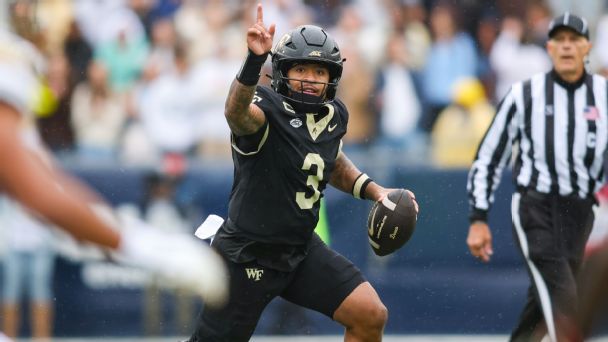
In College Football’s Week 12 Heisman Trophy race, Wake Forest quarterback Gio Lopez is surging onto the national radar with a late-season breakout. Much like the Demon Deacons themselves, Lopez flew quietly beneath the SEC and Big Ten spotlight for months before stringing together decisive performances that forced voters to take notice.
With conference championship races tightening and College Football Playoff seeding on the line, late-November primetime showcases carry outsized weight in Heisman balloting — especially when a dark-horse quarterback elevates an underdog program.
WHY IT MATTERS Injects genuine drama into a Heisman race often dominated by blue-blood programs, while boosting Wake Forest’s postseason bowl and recruiting profile.
CRITICAL ANGLE Voters love a November Cinderella story, yet ACC dark horses historically face an uphill climb against SEC and Big Ten quarterbacks playing on higher-rated national broadcasts.
ANALYST DEEP DIVE · OFFLINE BRIEF
Key Takeaways
Wake Forest QB Gio Lopez is making a compelling late-season Heisman push in Week 12.
Late-November 'Heisman moments' routinely reshape voter sentiment more than September stats.
Underdog narratives gain traction when frontrunners stumble in rivalry games.
Winners & Exposed
Wake Forest’s national brand and ACC visibility get a huge lift; blue-blood Heisman favorites face tighter margin for error in rivalry week.
Contrarian / Skeptic View
Without a conference title game appearance or a signature upset over a top-10 opponent, dark-horse finalists rarely convert buzz into the trophy.
What to Watch Next
Rivalry-week box scores, conference championship matchups, and December Heisman finalist invitations.
NBA · ESPN
NBA Rookie Rankings: 10 standouts in a star-studded class
NBA · ESPN
ESPN’s inaugural 2026–27 NBA Rookie Rankings highlight ten early standouts from what scouts are already calling a remarkably deep and NBA-ready draft class. Rather than needing years of G League seasoning, multiple first-year guards and wings are stepping straight into high-usage rotation roles and swinging real games.
For rebuilding franchises, hitting on an immediate-impact rookie on a cost-controlled four-year contract is the single most valuable asset under the NBA’s punitive second-apron salary cap rules.
WHY IT MATTERS A strong rookie class accelerates rebuild timelines and gives small-market teams affordable star upside in the restrictive modern NBA salary-cap era.
CRITICAL ANGLE November rookie stats are famously noisy — high-usage guards on lottery teams often post flashy scoring numbers that cool off once defenses scout their tendencies by January.
ANALYST DEEP DIVE · OFFLINE BRIEF
Key Takeaways
The 2026 NBA draft class is delivering immediate rotation impact across ten standout rookies.
Under the NBA’s second-apron CBA rules, cheap rookie-scale stars are gold for roster construction.
Early-season usage rates and defensive versatility are key indicators of staying power.
Winners & Exposed
Cap-strapped contenders and rebuilding teams that nailed draft picks gain massive flexibility; veteran role players on expiring deals face shrinking minutes.
Contrarian / Skeptic View
The 'rookie wall' around the 40-game mark routinely separates true All-Star trajectories from hot November shooting streaks.
What to Watch Next
Rookie performance against top-10 defenses in December and NBA Cup knockout visibility.
MLB · ESPN
One trade ESPN experts would make before MLB lockout
MLB · ESPN
With a looming MLB lockout threatening to freeze baseball’s offseason transactions, front offices are racing the clock to execute aggressive last-minute trades. ESPN’s baseball analysts are mapping out bold win-now swaps — including moves involving marquee franchises like the Yankees and Red Sox — before the collective bargaining deadline slams the market shut.
Labor uncertainty dramatically alters trade leverage: contenders desperate to lock in starting pitching or middle-of-the-order bats may overpay now rather than risk a compressed, chaotic spring market if negotiations drag on.
WHY IT MATTERS Triggers a compressed pre-lockout trade frenzy that could reshape AL and NL pennant races months earlier than usual.
CRITICAL ANGLE Panic trading ahead of a labor freeze often produces lopsided deals where impatient big-market teams surrender elite prospects just to beat an artificial calendar deadline.
ANALYST DEEP DIVE · OFFLINE BRIEF
Key Takeaways
A looming MLB lockout is compressing months of offseason trade talks into an urgent pre-deadline sprint.
Contenders like the Yankees and Red Sox face pressure to lock in roster upgrades before transactions freeze.
Sellers holding controllable pitching hold maximum trade leverage right now.
Winners & Exposed
Rebuilding clubs selling controllable arms can extract premium prospect hauls; indecisive contenders risk getting caught empty-handed when the freeze hits.
Contrarian / Skeptic View
Front offices that stay disciplined during a pre-lockout rush often scoop up bargains once the labor deal is eventually ratified.
What to Watch Next
CBA negotiation deadlines, winter-meetings trade announcements, and major free-agent signings rushing to beat the freeze.
NHL · ESPN
A mystery no more? How movement tracking could shed new light on NHL goaltenders
NHL · ESPN
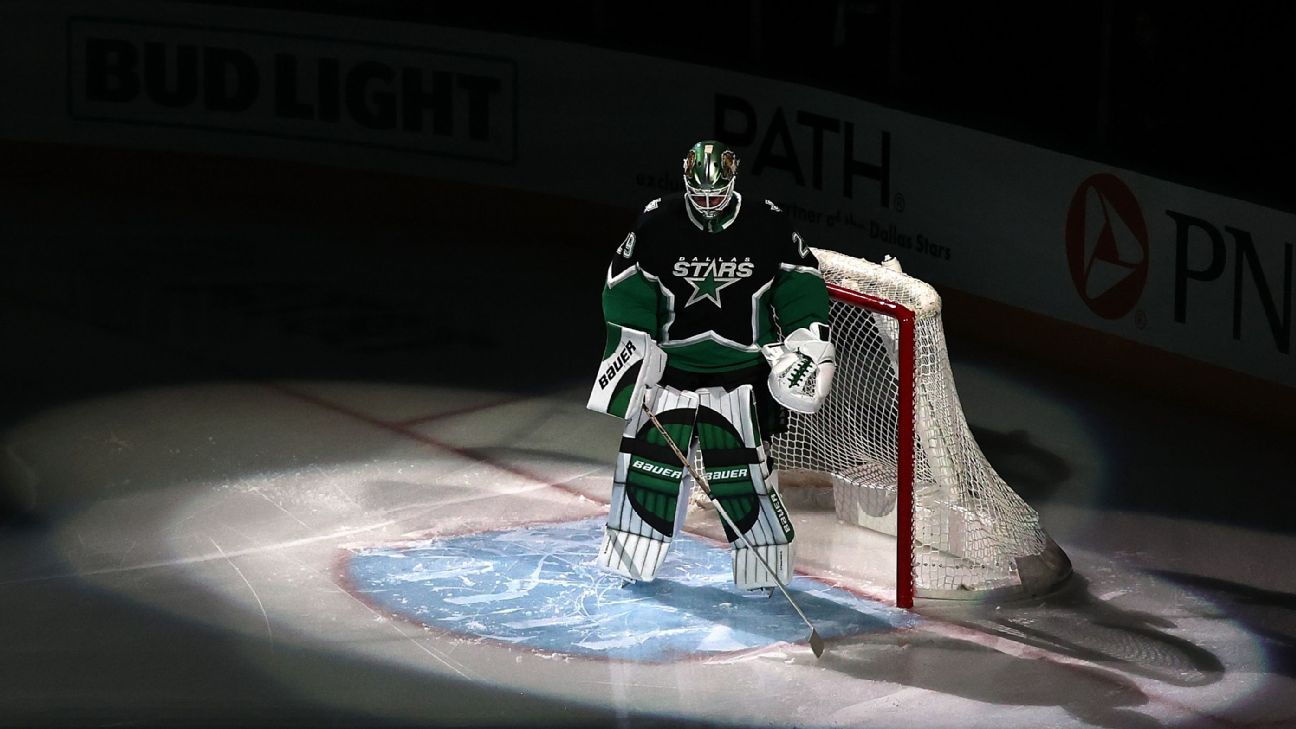
Goaltending has long been hockey’s most unpredictable black box, but a new wave of high-resolution movement-tracking technology is starting to demystify NHL netminders. By measuring micro-mechanics — from butterfly drop speed to lateral post-to-post efficiency — front offices hope to replace gut-feel scouting with repeatable biomechanical analytics.
In a hard-cap league where a bad five-year goalie contract can sink a championship window, even a 5% improvement in predicting goaltender longevity and save consistency is worth millions.
WHY IT MATTERS Could revolutionize NHL draft evaluation, goalie coaching, and free-agent valuation much like pitch-tracking transformed MLB.
CRITICAL ANGLE Data can measure skating and butterfly mechanics, but goaltending remains deeply psychological — tracking chips still cannot quantify composure in a Game 7 overtime.
ANALYST DEEP DIVE · OFFLINE BRIEF
Key Takeaways
NHL teams are adopting detailed movement-tracking data to decode goaltender mechanics and fatigue.
Analytics are closing one of the last unquantified frontiers in North American pro sports.
Winners & Exposed
Analytics-forward NHL front offices and biomechanically efficient young goalies benefit; traditionalist scouting departments risk falling behind.
Contrarian / Skeptic View
Over-coaching natural athletic instincts into robotic, data-optimized patterns can sometimes hurt unorthodox goalies who thrive on anticipation.
What to Watch Next
Adoption of optical tracking metrics across NHL draft combines and summer goalie contract negotiations.
Science, Space & Daily Curiosities
NASA · Orbital · Almanac
NASA Astronomy Picture of the Day
NASA Science — NASA APOD
After this galaxy battle, only one galaxy will remain. Already visible in the featured picture are rings and faint star swirls from previous gravitational encounters.
European Spaceflight
BepiColombo Enters Orbit Around Mercury Despite “Software Glitch”
European Spaceflight
The European Space Agency’s BepiColombo mission has successfully entered orbit around Mercury, overcoming a tense last-minute software glitch that cut a critical thruster burn shorter than planned. After years of complex gravity-assist flybys through the inner solar system, reaching orbit around the Sun’s scorching innermost planet marks a major engineering triumph for Europe and Japan’s JAXA.
Mercury’s extreme thermal environment and deep solar gravity well make it one of the hardest destinations in planetary science. Now in orbit, BepiColombo’s dual spacecraft will map the planet’s magnetic field, oversized iron core, and permanently shadowed polar ice.
WHY IT MATTERS Delivers a flagship scientific win for European space autonomy and unlocks high-resolution data on how rocky planets form close to their host stars.
CRITICAL ANGLE While mission controllers deserve huge credit for the recovery, the thruster software glitch underscores how thin the error margins remain on decade-long deep-space missions.
ANALYST DEEP DIVE · OFFLINE BRIEF
Key Takeaways
ESA and JAXA’s BepiColombo successfully achieved Mercury orbit despite a shortened thruster burn caused by a software glitch.
Dual orbiters will study Mercury’s magnetic field, iron core, and surface geology in unprecedented detail.
Reaffirms Europe’s top-tier capability in deep-space navigation and planetary science.
Winners & Exposed
ESA, JAXA, and European aerospace engineering teams score a historic milestone; planetary scientists worldwide gain a fresh decade of inner-solar-system data.
Contrarian / Skeptic View
Engineers still need to verify whether the shortened burn affects long-term fuel reserves or science-orbit adjustment timelines.
What to Watch Next
Orbit-stabilization telemetry updates, orbiter separation milestone, and first close-up scientific datasets from Mercury.
NASA
Eruption Extends Iwo Jima’s Beach
NASA
NASA satellite imagery shows a fresh volcanic eruption just off the southeastern shore of Iwo Jima has extended the Pacific island’s coastline, building new volcanic land above the waves in real time. Situated along the seismically restless Ring of Fire, Iwo Jima is one of the fastest-uplifting volcanic calderas on Earth.
Geologists caution that newly formed volcanic beaches and islets are notoriously fragile: relentless Pacific surf often erodes loose ash and tephra back beneath the ocean within months unless sustained lava flows anchor the shoreline.
WHY IT MATTERS Offers geologists a rare live laboratory for studying island formation, coastal erosion, and submarine volcanic hazards in the western Pacific.
CRITICAL ANGLE Viral headlines about 'brand-new islands' often exaggerate permanence — nature builds fast in volcanic zones, but the Pacific Ocean usually reclaims loose volcanic deposits just as quickly.
ANALYST DEEP DIVE · OFFLINE BRIEF
Key Takeaways
Submarine volcanic activity off Iwo Jima has physically extended the island’s southeastern beach.
Earth-observation satellites allow scientists to track rapid coastal topography changes week by week.
Long-term survival of the new shoreline depends on whether hardened lava reinforces the ash deposits.
Winners & Exposed
Volcanologists and Earth-observation programs gain valuable real-time data; local maritime and aviation corridors monitor ash and underwater eruption advisories.
Contrarian / Skeptic View
Most transient volcanic extensions around Iwo Jima wash away once eruptive activity pauses.
What to Watch Next
Follow-up NASA Landsat and Japan Coast Guard aerial surveys tracking erosion versus continued volcanic buildup.
On This Day in History
2023
Hibiscus Rising (pictured), a sculpture commemorating the life of David Oluwale, was unveiled in Leeds.
2009
The Avdhela Project, an Aromanian digital library and cultural initiative, was launched in Bucharest, Romania.
1976
A magnitude-7.3 earthquake struck eastern Turkey, destroying most of buildings in the area and causing at least 4,000 casualties.
“Once the Choice is Made, Do Not Look Back, Do Not Second-Guess Your Decisions.”
— Muhammad Ali
Curiosity of the Day: A horse can look forward with one eye and back with the other.
Ready · 10 stories
The Morning Chronicle — Tap Play for auto-scrolling briefing